

A pregnancy after IVF is, essentially, a pregnancy that follows the same biological stages as any pregnancy conceived spontaneously. The difference is how we confirm and monitor it in the first weeks: because we know the exact timing of the embryo transfer, we can track early development more precisely and adjust supportive treatment when needed.
In my practice, I emphasize one simple thing: once we achieve a pregnancy after IVF, the goal becomes maintaining a balance between appropriate monitoring and as calm a journey as possible for you. That means clear information, check-ups at the right time, and personalized decisions—without exaggerations and without unnecessary “what-if” scenarios.
What “pregnancy after IVF” means and how it differs from a spontaneous pregnancy
When we talk about pregnancy after IVF, we mean a pregnancy obtained after fertilization in the lab and embryo transfer, which then implants and develops in the uterus. From a medical standpoint, its evolution can be completely normal.
Differences are mostly in the first weeks, when we have a more exact calendar (we know the transfer “day 0”), there is often supportive treatment (usually progesterone), and—depending on your history—we may choose closer initial monitoring.
If you’d like to explore the steps and logic of the procedure in more detail, you can find the full explanation here: in vitro fertilization (IVF).
Confirming pregnancy after IVF: beta-hCG, ultrasound, and the right milestones
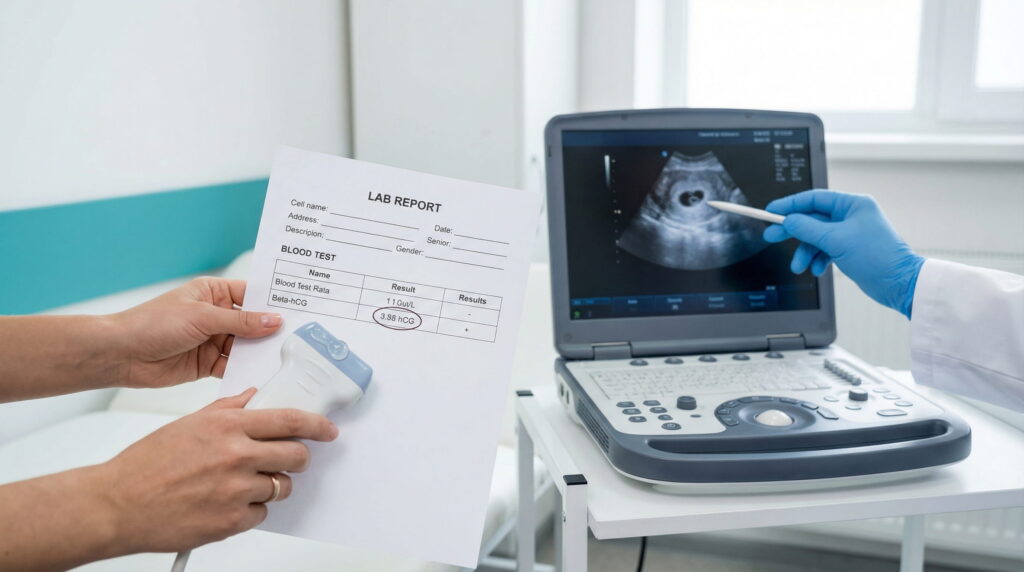
In most cases, confirmation of a pregnancy after IVF begins with beta-hCG (a blood test). What matters is not only a “good” value, but its dynamics at the recommended interval. Then comes the ultrasound, which confirms the location and the pregnancy’s development.
Ultrasound has two main goals: to confirm the pregnancy is intrauterine and to assess development at the appropriate time. An important element in pregnancy after IVF is calculating gestational age. Because the transfer date is known, interpreting ultrasound milestones becomes more precise—and that helps you understand why sometimes it’s simply “too early” to see a certain landmark.
Supportive treatment after IVF: why it exists and how we manage it

In many situations, after transfer we recommend supportive treatment (most commonly progesterone) to support the early phase of implantation and development. Naturally, this is where most questions arise: “How long do I take it?”, “If I stop it, will something happen?”, “Is it normal to have symptoms?”
Realistically, treatment is adjusted based on your history and how things evolve. My recommendation is to avoid “on-your-own” changes, even if you feel well: sometimes the body has adapted, other times it still needs support. If unpleasant side effects occur, we discuss them and find solutions—but the decision to modify treatment should be medical.
Symptoms can come both from pregnancy and from treatment. That’s exactly why it helps to focus on what matters: warning signs and good communication with the doctor following you, so that pregnancy after IVF is managed calmly and coherently—not impulsively.
“You deserve to be listened to, seen, treated with respect and supported throughout your life.”

Pregnancy After IVF | What You Need to Know
A pregnancy after IVF is, essentially, a pregnancy that follows the same biological stages as any pregnancy conceived spontaneously. The difference is how we confirm and monitor it in the first weeks: because we know the exact timing of the embryo transfer, we can track early development more precisely and adjust supportive treatment when needed.
In my practice, I emphasize one simple thing: once we achieve a pregnancy after IVF, the goal becomes maintaining a balance between appropriate monitoring and as calm a journey as possible for you. That means clear information, check-ups at the right time, and personalized decisions—without exaggerations and without unnecessary “what-if” scenarios.
First-trimester monitoring: what we track and why
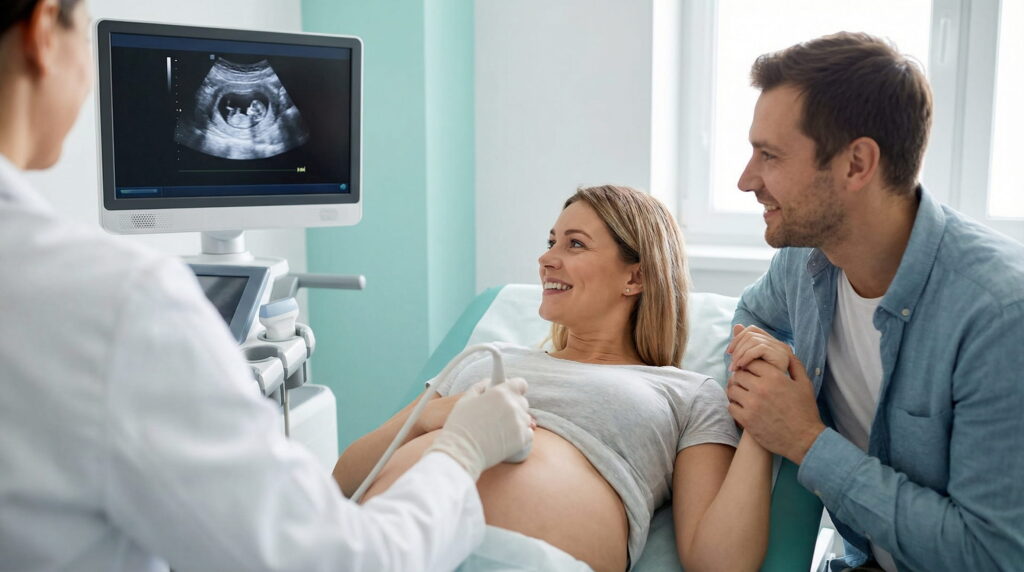
The first trimester—especially in pregnancy after IVF—is the stage when we focus on confirming progression, correct location, and the transition to standard prenatal monitoring.
Depending on the case, we monitor:
- ultrasound development at the right milestones;
- symptoms and any bleeding;
- whether supportive treatment should be continued or adjusted;
- specific risks (rare, but important) such as ectopic pregnancy or, very rarely, heterotopic pregnancy.
If the pregnancy is twin, monitoring may be a bit closer—not because we want to “look for problems,” but to optimize the chances of a good outcome and establish a follow-up strategy early.
Symptoms in pregnancy after IVF: what is normal and when to seek help
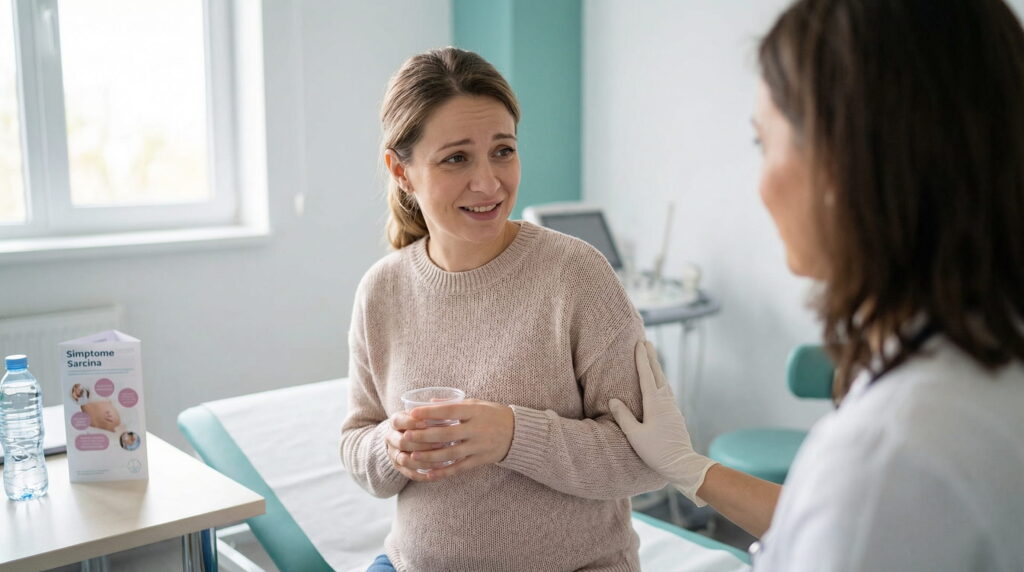
It’s normal to feel a mix of excitement, fear, and heightened attention to every symptom. In the first weeks, many sensations are benign: fatigue, nausea, breast tenderness, mild abdominal discomfort. Sometimes small spotting occurs, which does not automatically mean something serious, but it should be evaluated properly.
There are, however, situations where it’s important to contact your doctor promptly or go to a medical unit. We keep bullet points here because they’re useful as a practical list:
- heavy bleeding or bleeding that intensifies;
- severe, persistent abdominal pain, especially one-sided;
- marked dizziness, fainting, or a sudden decline in general condition;
- fever, chills, intense associated pain;
- pelvic pain accompanied by bleeding and feeling unwell.
Otherwise, most symptoms are managed with calm, appropriate monitoring and tailored recommendations. For you, the most important thing is to know you are not “on your own” when interpreting signs—and pregnancy after IVF does not need to be lived as a state of constant alarm.
Lifestyle in pregnancy after IVF: what truly helps
In pregnancy after IVF, lifestyle recommendations should not be extreme. The goal is to support your body and reduce factors that could complicate things—without turning pregnancy into a list of prohibitions.
Moderate movement, good sleep, and balanced meals are generally more valuable than any viral “trick.” Depending on how things progress and what specific recommendations you receive, we can also discuss pace of physical activity, travel, or resuming certain activities.
Here, the emotional component matters a lot. Many patients describe the period after transfer as a “tense waiting,” which can amplify anxiety. In such situations, psychological support can make a real, practical difference—not only “in how you feel.” For support options, see psychological counseling.
Screening and tests in pregnancy after IVF: how to view them correctly
In pregnancy after IVF, the screening plan remains broadly the same as for any pregnancy, but it is adapted to maternal age, medical history, and the type of procedure. Some couples have already done preimplantation genetic testing (PGT), and the natural question is: “Does NIPT or the first-trimester combined test still make sense?”
The correct answer depends on the context. PGT reduces certain risks, but it doesn’t automatically replace every screening step in pregnancy. In consultation, we discuss what information each test provides, when it makes sense, and what medical decision it can support. The key is to avoid over-testing “out of fear,” while also not skipping steps that are relevant for you.
Second and third trimester: evolution, check-ups, and birth
For many patients, once stable progression is confirmed in the first trimester, the pregnancy settles into a rhythm much closer to standard monitoring. That doesn’t mean we “forget” the IVF history—it just means we don’t let it dictate every decision.
Regarding birth, pregnancy after IVF does not automatically require a C-section. The mode of birth is decided based on obstetric criteria (baby’s position, pregnancy course, maternal condition, any complications), not solely because conception occurred through IVF. A good approach means preparing your questions early, clarifying possible scenarios, and having a flexible, medically justified plan.
For an institutional perspective on care and services, you can also consult the page in vitro fertilization (IVF).
Frequently Asked Questions
Is pregnancy after IVF automatically considered “high-risk”?
Not automatically. Sometimes it is monitored more closely in the first weeks, especially because of history or supportive treatment. The real risk is assessed individually, based on age, prior history, and ultrasound evolution.
When is the first ultrasound done in a pregnancy after IVF?
Usually, the first ultrasound is scheduled when it makes sense to see useful milestones (location and evolution). If it’s done too early, it can create unnecessary anxiety due to the absence of signs that simply aren’t visible yet.
How long do you take progesterone after IVF?
The duration varies and should be determined by the treating doctor. In many cases, it continues until the placenta takes over enough hormonal function, but the exact timing depends on the initial regimen and pregnancy evolution.
Are mild cramps or spotting normal in the first weeks?
They can be normal, but they shouldn’t be ignored. Some minor bleeding occurs without consequences, but it’s important to be evaluated properly—especially if it intensifies or is associated with significant pain.
Can I exercise during pregnancy after IVF?
In many situations, moderate movement is beneficial. However, recommendations should be individualized (especially in the first weeks or in twin pregnancies). If you’re unsure, it’s safer to adjust the type and intensity together.
Does a twin pregnancy after IVF require different monitoring?
Usually, yes—because twin pregnancies have specific characteristics of evolution and risk. Monitoring doesn’t mean “looking for problems,” but tracking specific parameters and planning the care strategy early.
If PGT was done, does NIPT or other screening tests still make sense?
It may, depending on the type of PGT and what information you want to obtain during pregnancy. PGT reduces certain risks, but it doesn’t automatically replace all recommended screening steps.
Does pregnancy after IVF automatically lead to a C-section?
No. The mode of birth is decided based on obstetric criteria and pregnancy evolution. The fact that the pregnancy was achieved through IVF can influence planning, but it is not an automatic indication for C-section.

Dr. Andreas Vythoulkas’ role in Pregnancy After IVF
In my approach, pregnancy after IVF is not a time when we “do more” just to feel safer, but a stage where we choose exactly what makes sense: what we monitor, when, and why. I aim for each step to be explainable and logical—from interpreting beta-hCG and ultrasounds to how we adjust supportive treatment—so you understand the milestones and don’t live day-to-day in uncertainty.
My goal is to strike a balance between safety and normality. That means confirming proper evolution, identifying early the situations that need intervention, and at the same time avoiding over-monitoring that adds stress without real benefit. In some cases, a decision such as changing the rhythm of check-ups or adjusting the support regimen is an optimization decision, not a reason to worry.
For many patients, the hardest part after transfer isn’t only the medical side, but the psychological tension: “What if a symptom appears?”, “What if I don’t feel the same sensations?”, “What if the ultrasound doesn’t show what I expected?” That’s why I aim for each stage to have a clear meaning—and for you to know what is normal, what is worth tracking, and when prompt evaluation is needed. The journey becomes easier when there is clarity, predictability, and a coherent strategy—not just tests and fragmented recommendations.
Talk with me about
Pregnancy after IVF

Sources
- ACOG – Perinatal Risks Associated With Assisted Reproductive Technology
- NICE – Ectopic pregnancy and miscarriage: diagnosis and initial management (NG126)
- ACOG – Tubal Ectopic Pregnancy (Practice Bulletin)
- RCOG – Bleeding and/or pain in early pregnancy (Patient Information)
- ESHRE – Guideline on Ovarian Stimulation for IVF/ICSI (include luteal support)
Similar Articles

IVF Psychological Counselling | Essential Support

When I Recommend PGT and What Couples Should Know Before This Stage
