

Nausea in the first trimester is one of the most common questions I receive in the office, especially at the beginning of pregnancy, when every symptom is interpreted very closely. In particular, for patients who achieved pregnancy after In Vitro Fertilization and the patient experience, the concern is even greater, because every bodily change carries a distinct emotional weight.
When nausea starts in pregnancy does not have an identical answer for all women, but there are clear medical reference points that I use in practice to distinguish between an ordinary symptom and a situation that needs evaluation. Usually, nausea and vomiting in pregnancy appear early, between weeks 4 and 7, may reach a peak around week 9 and, in most pregnant women, improve by around 16 to 20 weeks.
When Nausea Starts in Pregnancy and How It Usually Progresses
When nausea starts in pregnancy, many patients expect it to mean only morning discomfort. In reality, I often explain that the term “morning sickness” is imprecise, because symptoms may appear in the morning, afternoon, evening or even throughout the entire day. This is one of the reasons why anxiety increases unnecessarily: the patient compares what she feels with an oversimplified image of pregnancy and ends up believing that what is happening to her is not normal.
From my clinical experience, when nausea starts in pregnancy, the timing of onset matters, but its progression matters just as much. In most cases, the sensation begins mildly, then becomes more bothersome between weeks 6 and 10. For many patients, the most difficult period is around weeks 8 to 10, when sensitivity to smells, altered appetite and the feeling of an “empty” stomach make the picture worse. I do not consider the absence of nausea a sign of unfavorable progression, just as its presence does not guarantee a certain pregnancy outcome. I always interpret it in clinical context.
Why Nausea Is More Intense in Certain Weeks
When nausea starts in pregnancy and becomes more intense, the explanation is mainly related to the hormonal and digestive adaptations of the first trimester. Hormone levels rise rapidly at the beginning of pregnancy, and this context may influence both the nausea center and the rate at which the stomach empties. That is why some women feel worse when they have not eaten, when smells are strong or when fatigue is more pronounced.
I often tell patients that symptom intensity is not measured only by the number of nausea episodes, but by the real impact on hydration, nutrition and daily functioning. When nausea starts in pregnancy and remains manageable, with small meals and tolerated fluids, we are usually talking about a common first-trimester manifestation. When, however, nausea is accompanied by frequent vomiting, refusal of food, marked weakness or weight loss, the approach needs to change.
What I Consider Normal and What Makes Me Recommend Medical Evaluation
When nausea starts in pregnancy, the essential question is not only “since when?” but also “how much is it affecting the body?” I consider nausea relatively typical when it still allows at least some intake of liquids and food, even if there are more difficult days. By contrast, I recommend medical evaluation when the patient cannot keep fluids down, urinates very little, has dizziness, palpitations, loses weight or notices that the symptoms are worsening quickly. These signs may indicate dehydration or imbalances that should not be managed at home without supervision.
When We Are Talking About Hyperemesis Gravidarum
In my practice, I use this distinction carefully, because hyperemesis gravidarum does not mean only “stronger nausea,” but the severe form of pregnancy-related nausea and vomiting, associated with dehydration, weight loss and electrolyte imbalance. It is a situation that may require active treatment and sometimes hospital care. That is exactly why, when nausea starts in pregnancy and goes beyond the level of manageable discomfort, I prefer earlier evaluation, not later. Treatment started early can reduce the risk of worsening.
How I Recommend the Situation Be Managed When Nausea Starts in Pregnancy
When nausea starts in pregnancy, the first principle I recommend is not to wait until exhaustion sets in. Simple measures applied early are often more useful than late interventions. In addition, nutrition during this period needs to be understood realistically. I am not looking for perfection, but for digestive tolerance, fluid intake and avoiding long periods without food. In this context, the article about nutrition in fertility can support a better understanding of more balanced food choices around conception and at the beginning of pregnancy.
Food and Meal Timing
I usually recommend small, frequent meals, simple foods that are easy to tolerate and liquids taken in small sips throughout the day. Some patients tolerate dry foods better in the morning, others tolerate cold foods better than hot ones, and many notice that certain smells become triggers. I do not insist on a rigid list, but on observing the individual pattern. Ginger may help in some cases, and vitamin B6 as well as the doxylamine-pyridoxine combination are known therapeutic options, but the regimen should be established medically, especially if symptoms are increasing in intensity.
When Treatment May Be Needed
When nausea starts in pregnancy and basic measures are no longer enough, I assess whether there is an indication for treatment. Some patients need only dietary adjustments and rest, while others need antiemetic medication that is safe in pregnancy. The decision is not made based on general advice from the internet, but on severity, oral tolerance, previous history and clinical evaluation. For patients who have already gone through reproductive treatments, including the context of hormones in IVF and treatment success, I always explain the difference between early hormonal effects and a digestive picture that requires intervention.
What I Often Observe When Pregnancy Occurs After In Vitro Fertilization
After pregnancy after IVF: what you need to know, patients are naturally much more attentive to every symptom. When nausea starts in pregnancy in such a context, the question is not only medical, but emotional as well. In my practice, I explain that nausea in a pregnancy achieved after In Vitro Fertilization generally follows the same biological logic as early pregnancy: it may appear in the first weeks, it may intensify around the second month and it should not be interpreted in isolation, without correlation with ultrasound, hydration and general condition. Where anxiety is high, I prefer simple explanations, clear reference points and proportionate monitoring, not alarmism.
“You deserve to be heard, seen, treated with respect, and supported throughout every stage of life.”

Frequently Asked Questions
When does nausea most commonly start in pregnancy?
It most commonly starts between weeks 4 and 7 of pregnancy. Some patients notice it even earlier, while others only after the missed period, but the first-trimester onset remains the most typical.
When is nausea more intense in pregnancy?
Usually, peak intensity appears around weeks 8 to 10, sometimes up to week 12. This is the period when sensitivity to smells, fatigue and irregular eating patterns can intensify symptoms.
Is it normal to feel nauseous all day, not only in the morning?
Yes. The popular term “morning sickness” is limiting. Nausea may appear at any time during the day or night, and this often fits within the usual picture of early pregnancy.
If I do not have nausea, does that mean the pregnancy is not progressing well?
No. The absence of nausea does not automatically indicate a problem. There are perfectly normal pregnancies without this symptom, which is why interpretation should always be made together with medical evaluation and not only according to subjective sensations.
How long does nausea in pregnancy usually last?
In most pregnant women, symptoms improve by 16 to 20 weeks. In some women they may persist longer, but the first trimester and the beginning of the second trimester are the most typical periods.
What can I eat when nausea is stronger?
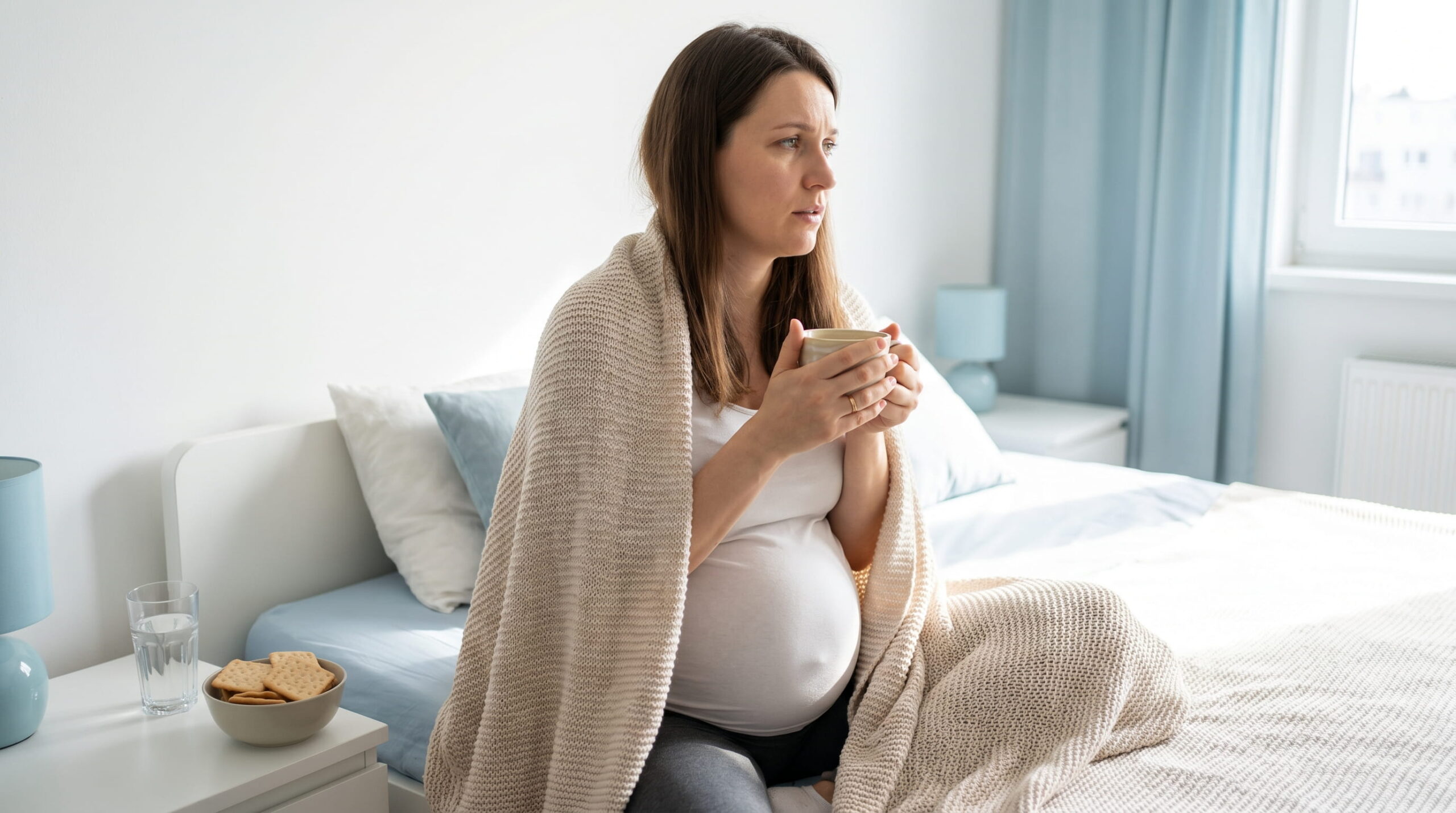
As a rule, simple foods in small, repeated amounts are better tolerated than large meals. Plain crackers, toast, cold or less seasoned foods and liquids taken in small sips are often easier to tolerate.
When should nausea in pregnancy worry me?
When you can no longer keep fluids down, dizziness appears, urination becomes infrequent, weakness is marked, weight loss occurs or vomiting becomes repeated. In these situations, I recommend rapid medical evaluation to rule out a severe form.
After In Vitro Fertilization, does nausea in pregnancy have a different meaning?
Not necessarily. I interpret it in the context of the pregnancy’s overall progression, not as a single sign. After In Vitro Fertilization, patients’ attention is naturally greater, but the medical logic of evaluation remains the same: symptom, intensity, hydration, ultrasound and general condition.
Dr. Andreas Vythoulkas’ Role in Evaluating Pregnancy Nausea
In evaluating pregnancy nausea, my role is to distinguish between a common first-trimester symptom and a condition that can affect maternal balance. I do not look only at when nausea starts, but also at its intensity, the patient’s ability to eat and stay hydrated, the hormonal context and the clinical course of the pregnancy.
I believe it is important for the patient to receive clear reference points, not general formulas. In my practice, I aim to explain what is likely physiological, what requires monitoring and when therapeutic intervention is needed. This type of approach is especially important in pregnancies achieved after assisted reproductive treatments, where anxiety can amplify the perception of symptoms.
That is why, when nausea starts in pregnancy, I recommend a calm, contextual and proportionate evaluation. The goal is not to dramatize a common symptom, but to correctly identify the cases in which the discomfort goes beyond the normal range and may require specific medical measures.
Talk to me about
When Nausea Starts in Pregnancy
Sources
Similar Articles

How I Recommend Sleeping Positions in Pregnancy, Depending on the Trimester

Can Repeated Abortions Lead to Infertility?
