


In my practice, laparoscopy is one of the procedures that can change the direction of a fertility plan when we suspect a “hidden” pelvic problem (endometriosis, adhesions, tubal damage) or when we need to treat something concrete—not just confirm a diagnosis. Important: laparoscopy is not a “mandatory step” for everyone, but in the right cases it can provide fast answers and, sometimes, treatment within the same operation.
The first question I hear often is simple: “Does laparoscopy make sense for me?” The correct answer isn’t universal; it depends on age, symptoms, medical history, investigations already done, and—very importantly—your goal (trying naturally, insemination, IVF, fertility preservation).
What laparoscopy is and why it matters in infertility
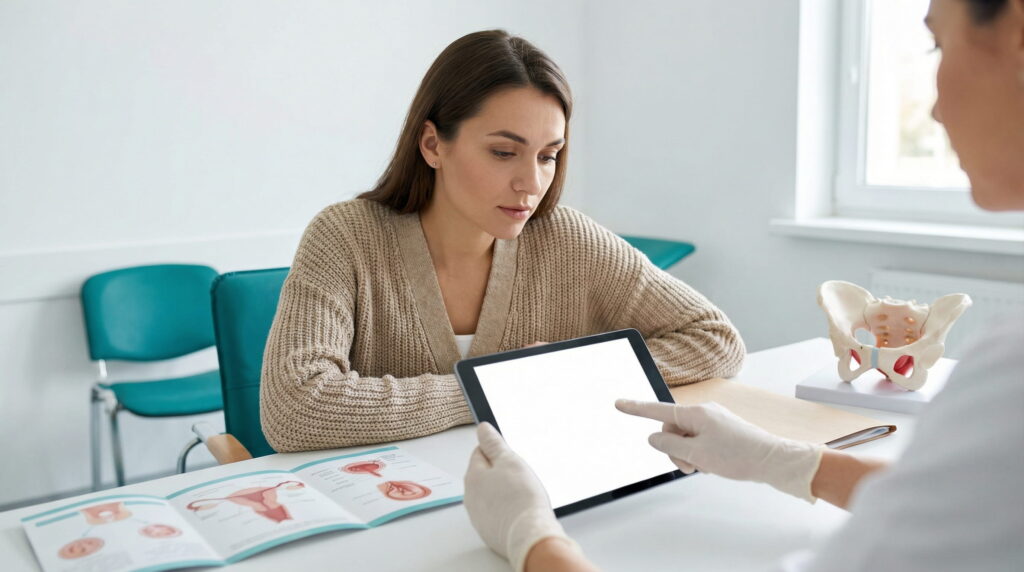
Laparoscopy is a minimally invasive procedure performed under anesthesia through small incisions, using a video camera. In gynecology, I use it both as a diagnostic method (when I need to see the pelvis directly) and as a treatment method (when I can correct, in the same session, certain issues that affect fertility).
In infertility, the value of laparoscopy comes from a simple fact: there are situations where blood tests and ultrasound can’t “tell the whole story.” Sometimes the cause lies outside the uterus (adhesions, endometriosis, subtle pelvic lesions), and here laparoscopy can make the difference between assumptions and certainty.
What laparoscopy can diagnose in infertility
When I enter the pelvis with laparoscopy, what I’m essentially looking for is the “real map” of the organs: how they look, how they move, whether there is inflammation, lesions, scarring, or areas that “pull” tissues out of their normal position.
Endometriosis
Endometriosis is one of the most important causes that laparoscopy can confirm and stage accurately. In practice, endometriosis can affect fertility through inflammation, by altering anatomy (adhesions), through endometriomas, or by impacting ovarian function.
Adhesions
Adhesions are “bands” of scar tissue that can stick organs together. Sometimes they appear after inflammation, surgery, or infections. They can change the position of the fallopian tubes, limit ovarian mobility, and affect egg pick-up.
Fallopian tubes and the pelvic area
Laparoscopy helps me assess the appearance of the tubes and the pelvis as a whole. In certain situations, an intraoperative test can also be performed to suggest tubal patency, but the decision depends on medical history and the fertility plan.
Other findings
Other findings may include ovarian cysts, fibroids with anatomical impact, chronic pelvic inflammation, or subtle changes that explain a patient’s symptoms.
Laparoscopy as treatment, not just diagnosis
A key reason laparoscopy can be useful is that, if I find a treatable problem, I can often treat it then and there—during the same intervention.
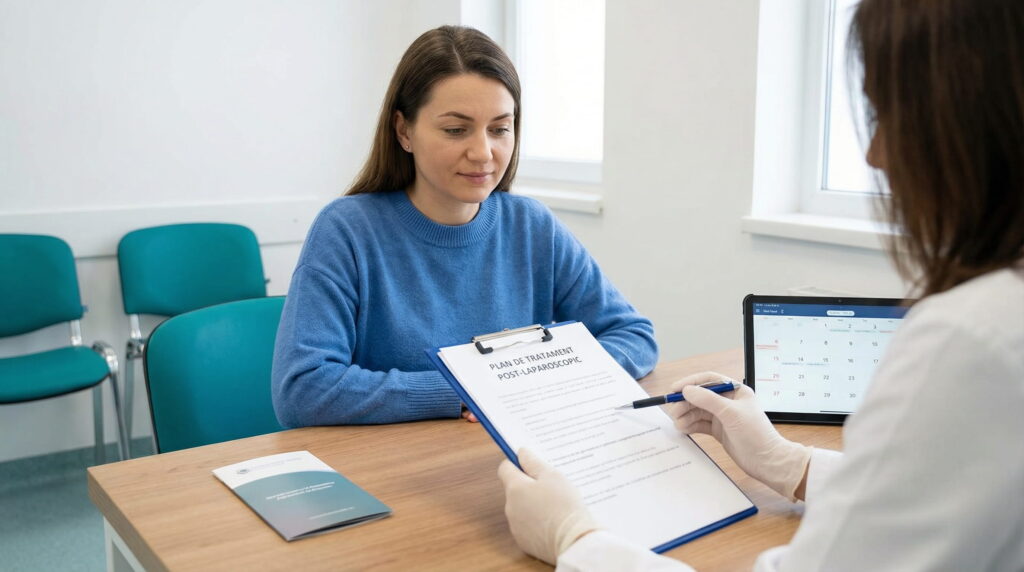
Here it’s important to keep expectations realistic: laparoscopy can improve the conditions for achieving pregnancy, but it does not “guarantee” pregnancy. The impact depends on:
- age and ovarian reserve;
- severity of endometriosis/adhesions;
- sperm quality;
- duration of infertility and history of pregnancies/miscarriages;
- whether there are other causes as well (for example, severe tubal factor).
There are also situations where, even though laparoscopy could be done, the better choice is to go directly to In Vitro Fertilization (IVF)—for example, when time is critical, ovarian reserve is low, or the main cause lies elsewhere. I like to explain these decisions using clear medical criteria, not general “preferences.”
What laparoscopy involves, in brief
Typically, laparoscopy is performed under general anesthesia. A few small incisions are made, the camera and fine instruments are introduced, and the surgeon operates under magnified visual control.
Most patients mobilize quickly after the procedure. The most bothersome discomfort is not necessarily at the incision sites—it can be a sensation of abdominal pressure or shoulder pain (due to the gas used to create working space).
Procedure duration varies: a strictly diagnostic laparoscopy can be shorter, while one in which I treat extensive endometriosis or complex adhesions may take longer. The difference is what we find—and how much it is safe and useful to address in a single session.
“You deserve to be listened to, seen, treated with respect and supported throughout your life.”

Preparing for laparoscopy
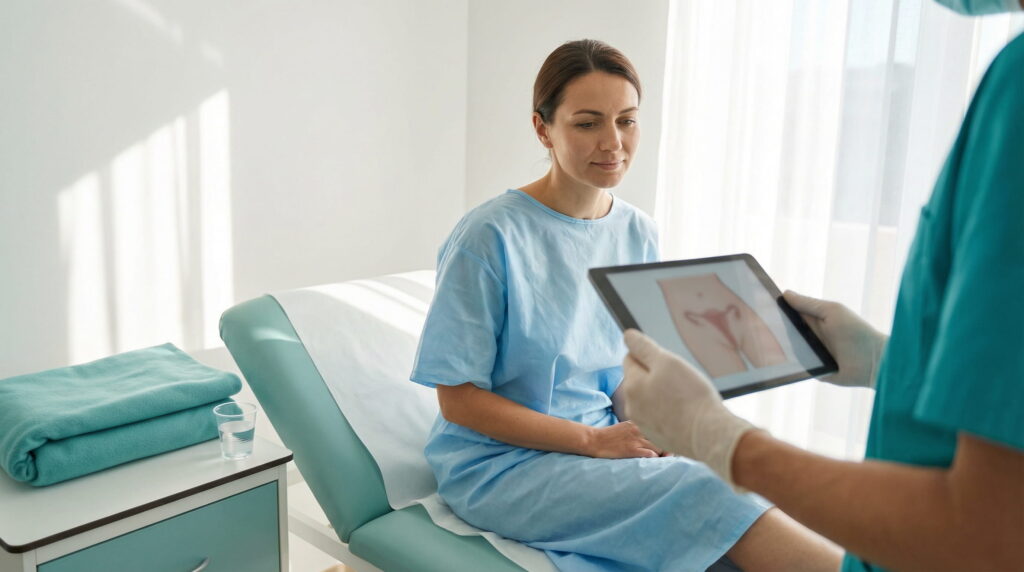
I want patients to arrive on the day of the procedure with a clear plan and no surprises. Preparation generally includes the pre-anesthesia consultation and the recommended lab tests. Depending on your history, additional investigations may be needed.
As a practical guide, I usually discuss:
- current medication (especially anticoagulants, anti-inflammatories, supplements);
- surgical history and any allergies;
- what your latest gynecological investigations show and what exactly we are trying to clarify through laparoscopy.
Beyond that, recommendations are the standard ones for anesthesia: following fasting instructions and organizing the logistics (companion, transport, rest days).
Recovery after laparoscopy and resuming the fertility plan
In the first 24–72 hours, most patients describe a combination of fatigue, abdominal discomfort, and sensitivity with movement. Usually, with gentle mobilization and symptomatic treatment, things improve quickly.
Over the following days, recovery depends on what was done intraoperatively. A simple diagnostic laparoscopy generally recovers faster than an operation in which I excised endometriosis lesions or released adhesions.
The natural question is: “When do we resume trying for pregnancy?” My answer is that resuming depends on:
- what we found and what we treated;
- how the uterus and ovaries look at follow-up;
- whether the plan is natural conception, insemination, or IVF.
Sometimes, after laparoscopy for endometriosis, I recommend a time window in which trying naturally makes sense; other times—especially when time factors exist—we move more quickly to the next step. If it helps you see what patients’ pathways look like beyond medical details, there is also the resource about the patient experience, which complements the “what should I expect” side.
Risks and limitations of laparoscopy
Any intervention carries risks, and my role is to explain them clearly and weigh them against the expected benefit.
Possible risks include bleeding, infection, anesthesia complications, and—more rarely—injury to nearby organs. Their likelihood depends on local anatomy, previous surgeries, the presence of adhesions, and the complexity of the procedure.
The main limitation of laparoscopy is that, while it can correct anatomy and reduce inflammation or visible lesions, it cannot control all factors involved in fertility. That is why I never view it as “the solution” in itself, but as a step integrated into a complete plan.
Questions worth asking before laparoscopy
I encourage patients to ask directly what matters in practical terms—not just “how it’s done.” For example:
- What is the main suspicion and what exactly are we trying to clarify through laparoscopy?
- If you find endometriosis/adhesions, what will you treat in the same session and what would you prefer to leave for another time?
- How will the intervention influence my plan: natural attempts, insemination, or IVF?
- What is the realistic estimate of benefit in my case, in relation to age and other factors?
Frequently Asked Questions
Will laparoscopy help me get pregnant naturally?
It depends on what I identify and treat. If infertility is influenced by endometriosis, adhesions, or certain anatomical problems, laparoscopy can improve the conditions for achieving pregnancy. If, however, there are major factors elsewhere (very low ovarian reserve, severe male factor), the benefit of surgery may be limited, and the optimal plan may be different.
Is laparoscopy mandatory before IVF?
No. In many cases, laparoscopy isn’t necessary before IVF. I recommend it only if I suspect a problem that would reduce IVF success or increase the risk of complications (for example, hydrosalpinx, severe endometriosis, significant adhesions). I always decide based on the clinical context and time available.
How long does recovery take after laparoscopy?
For a diagnostic laparoscopy, many patients feel significantly better within a few days, and returning to light activities is relatively quick. If the procedure is therapeutic and complex, recovery can take longer. I prefer to give a realistic interval after I know exactly what was done intraoperatively—not just a general average.
Does laparoscopy affect ovarian reserve?
A diagnostic laparoscopy alone should not affect ovarian reserve. However, when we treat ovarian cysts (especially endometriomas), there is an important discussion about technique and the balance between benefit and protecting ovarian tissue. That is why, in cyst cases, planning is essential: what we treat, how we treat it, and what fertility goal we are pursuing.
Is laparoscopy painful?
Not during the procedure, because it’s done under anesthesia. Afterward, discomfort is usually moderate and controllable with medication. Some patients feel more discomfort from the gas (pressure sensation, sometimes shoulder pain). In general, this improves in the first few days.
When can I resume sexual intercourse after laparoscopy?
It depends on the type of intervention and how healing progresses. Typically, I recommend resuming intercourse after discomfort resolves and after the post-op check, when I confirm everything is fine. If I performed extensive therapeutic steps, the interval may be longer. I prefer a personalized recommendation rather than “after X days” for everyone.
Does laparoscopy “unblock” the fallopian tubes?
In certain situations, we can treat some tubal issues or adhesions that pull the tubes out of their normal position. However, not every tubal blockage is reversible, and sometimes “unblocking” does not restore good tubal function. In severe tubal factor cases, the optimal strategy may be IVF—precisely to avoid losing time and to reduce the risk of ectopic pregnancy.
Which post-laparoscopy signs should send me urgently to a doctor?
If you develop fever, severe and increasing abdominal pain, heavy bleeding, difficulty breathing, a markedly worsened general condition, abnormal discharge from the incision sites, or any symptom that does not feel like a typical recovery, contact your medical team urgently.
Dr. Andreas Vythoulkas’ role in laparoscopy
For me, laparoscopy is not an “objective” in itself, but a tool. My role is to use it when it brings real value—and to avoid it when it would mean an extra step without clear benefit.
I look at three things before recommending surgery: what medical suspicion I have, how the laparoscopy result would change your fertility plan, and how important time is in the equation. That is why the discussion is never just about “can it be done,” but “does it make sense to do it now?”
When laparoscopy is indicated, my approach is to obtain relevant information and—if safe and useful—to treat, in the same session, what can improve your chances. Then the essential part is the plan afterward: sometimes it’s natural attempts, sometimes moving to IVF, and other times a stepwise plan.
Talk with me about
Laparoscopy

Sources
Similar Articles

How Long an IVF Cycle Takes: Stages, Timeline and When to Do the Pregnancy Test

Twin Pregnancy After IVF: What Is Different in Monitoring
