

Sometimes, patients come to consultation after months or years of trying to understand why their periods have become more painful, heavier or why pregnancy is taking longer to occur. In these discussions, I often explain that adenomyosis and fertility can be connected, but this does not automatically mean that a diagnosis of adenomyosis excludes the chance of achieving pregnancy. When there is significant menstrual pain or suspicion of associated disease, I also often connect this discussion with the symptom profile of endometriosis, because these conditions can overlap clinically.
What Adenomyosis Is and Why It May Matter When You Want to Conceive
Adenomyosis is a benign condition of the uterus in which tissue similar to the one that normally lines the uterine cavity appears within the thickness of the uterine wall. In terms patients can easily understand, I often say that the uterus can become more sensitive, more inflamed and, sometimes, less “friendly” to the delicate processes involved in achieving and maintaining pregnancy. Symptoms can vary greatly: some women have intense menstrual pain, heavy bleeding or pelvic discomfort, while others find out about this issue by chance during an ultrasound examination.
When I discuss adenomyosis and fertility, I emphasize that the impact is not the same in every patient. Age matters, ovarian reserve matters, the presence of other causes of infertility matters, as do the form of adenomyosis and whether endometriosis, fibroids or other uterine changes are also present. That is why I never look at the diagnosis in isolation, but always in the context of the entire medical and reproductive history.
How Adenomyosis and Fertility Interact in Practice
In the office, when I explain the relationship between adenomyosis and fertility, I avoid absolute formulas. I do not tell patients that adenomyosis is always the main cause of infertility, but I do not minimize the issue either. In certain cases, adenomyosis can influence embryo implantation, can maintain a local inflammatory environment and can change the way the uterus contracts. All of this may matter especially in patients who have been trying to conceive for a longer time or who have gone through pregnancy losses or reproductive procedures without success.
I also say one important thing: adenomyosis and fertility should not be viewed only through the lens of spontaneous conception. Sometimes, the discussion also revolves around reproductive treatment strategies. In some patients, symptoms and inflammation need to be controlled first, in others we need to clarify whether there are associated lesions and, in certain situations, we need to discuss realistically the right timing for in vitro fertilization (IVF) and the patient experience. The choice is not made in a standard way, but in a personalized one, according to the patient’s complete clinical picture.
What Evaluations I Perform When I Suspect Adenomyosis Is Affecting Fertility
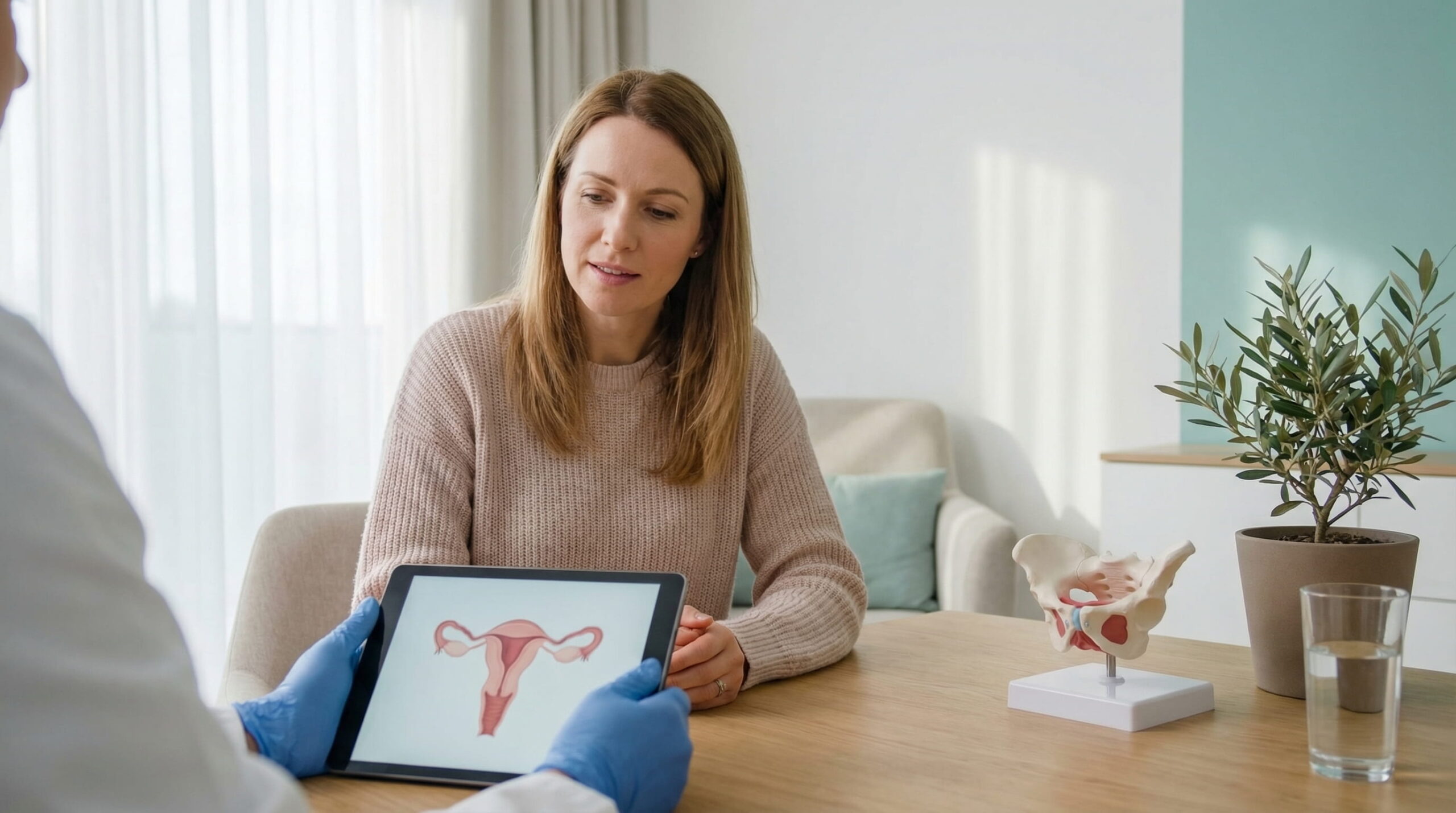
When I investigate adenomyosis and fertility, the first step is a careful discussion about symptoms, menstrual history, how long the conception difficulties have been present and whether there have been previous pregnancies, procedures or hormonal treatments. Then I rely heavily on imaging evaluation, especially a properly performed transvaginal ultrasound and, in some cases, on additional investigations when we need to better differentiate adenomyosis from other uterine pathologies or to understand the extent of the disease.
For me, the evaluation does not stop at the uterus. If we are talking about adenomyosis and fertility, I also have to assess the other factors that may influence the chance of pregnancy: ovulation, tubal patency when relevant, ovarian reserve and the male factor. At the same time, if signs appear that there is associated disease, I naturally integrate the discussion about endometriosis treatment or about the usefulness of laparoscopy, especially when pain, suspicion of associated lesions or the clinical history show that simple observation is not enough.
I also explain to patients that adenomyosis and fertility often mean finding a balance between symptom control and preserving the reproductive goal. Some hormonal treatments may relieve pain and bleeding, but they are not suitable during the period when the patient is trying to conceive immediately. That is exactly why the plan must be built according to the true priority of the moment: symptom control, spontaneous pregnancy or preparation for assisted reproduction.
“You deserve to be heard, seen, treated with respect, and supported throughout your life.”

Frequently Asked Questions
Does adenomyosis mean I can no longer get pregnant?
No. Many women with adenomyosis can achieve pregnancy. What matters is understanding how extensive the disease is, whether there are other associated causes and what time frame is being considered for pregnancy.
Does adenomyosis always cause obvious symptoms?
Not always. There are patients with pain and heavy bleeding, but there are also patients in whom adenomyosis is discovered by chance during a routine evaluation or a fertility work-up.
Is surgery mandatory if I have adenomyosis?
No. Treatment depends on symptoms, age, the severity of the disease and the reproductive plan. Not every patient has a surgical indication, and the decision must be made individually after a complete evaluation.
When should I ask for a consultation if I am concerned about adenomyosis and fertility?
If you have significant menstrual pain, heavy bleeding, persistent pelvic pain or if pregnancy is taking longer to occur, an evaluation is worth considering. The earlier the picture is clarified, the better the decisions can be adapted to your situation.

The Role of Dr. Andreas Vythoulkas in Evaluating Patients with Adenomyosis and Fertility Problems
In my practice, the relationship between adenomyosis and fertility is approached neither superficially nor alarmistically. I try to offer each patient a clear framework: what we know, what still needs to be investigated and which options are appropriate for the stage she is in. Sometimes, the immediate goal is to reduce pain and bleeding. Other times, the priority is to achieve pregnancy as quickly as possible, and then the strategy must be adapted without losing valuable time.
I consider it essential for the patient to understand why I recommend a certain investigation, why I sometimes delay a treatment and why, in other situations, I accelerate the steps toward a reproductive solution. When I talk about adenomyosis and fertility, I try to translate medical language into a calm, clear and honest explanation, so that decisions are informed and realistic, without absolute promises, but also without unnecessary fear.
Talk to me about
Adenomyosis and Fertility
Sources
Similar Articles

IVF Success Rates: What Influences Them and How We Can Improve Them

Genetic Counseling | What It Is and When It’s Recommended
