

When I discuss infertility, I often notice that the real question is not only what treatment exists, but which treatment makes sense in the actual context of each couple. When blocked fallopian tubes are involved, the decision between insemination and In Vitro Fertilization should not be made intuitively, but based on a proper evaluation of the tubes, the medical history and the other factors that may influence the chances of pregnancy.
From my clinical experience, this is where one of the most important clarifications appears: not every infertility case is treated in fixed steps and not every patient has to start with insemination. Intrauterine insemination is unlikely to increase the chances of pregnancy when the tubes are blocked, while IVF remains a classic indication when the tubes are blocked or severely affected.
Why Blocked Fallopian Tubes Change the Logic of Treatment
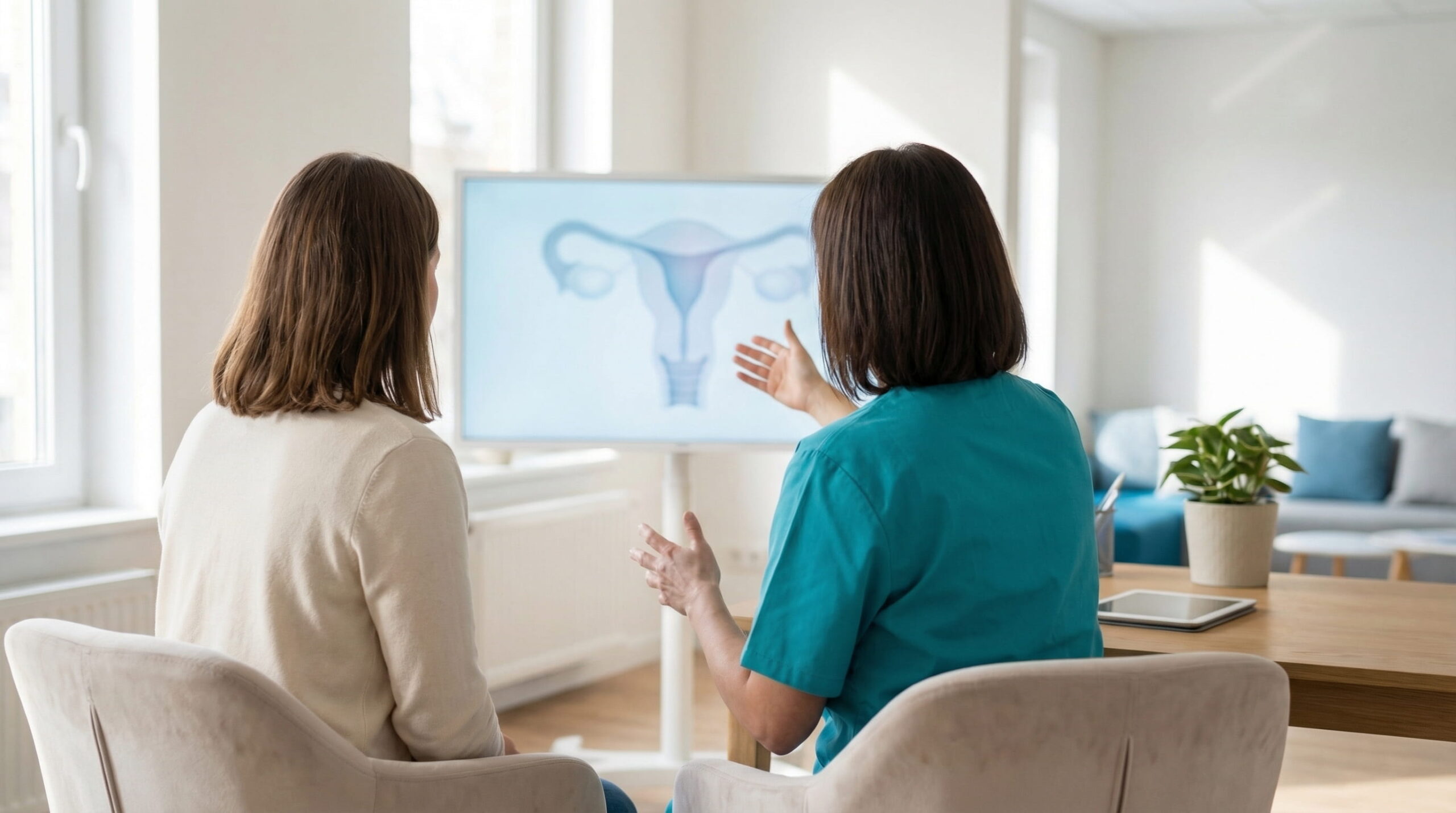
I often explain to patients that the fallopian tubes are not just an anatomical detail. They play an essential role in the meeting between the egg and the sperm. When we talk about blocked fallopian tubes, we are referring to a situation in which the natural path of fertilization may be completely or significantly impaired.
For this reason, simply introducing sperm into the uterus through insemination does not solve the underlying issue if the tube does not allow the egg and sperm to meet. This is why blocked fallopian tubes change not only the diagnosis, but also the entire treatment logic.
In my practice, I also emphasize that not all cases are identical. Sometimes only one tube is affected, other times there is bilateral blockage, hydrosalpinx or significant tubal damage following infections, endometriosis or surgical procedures. The more severe the tubal damage, the less logical and less effective insemination becomes.
In addition, tubal damage is associated with a higher risk of ectopic pregnancy, which is why I recommend caution when interpreting options and choosing the right timing for treatment.
What Investigations I Recommend Before Choosing Between Insemination and IVF
When I suspect blocked fallopian tubes, I do not start directly with treatment, but with confirmation. I consider it essential to determine whether the blockage is real, where it is located and how much it affects tubal function.
Hysterosalpingography is one of the useful investigations for assessing tubal patency, and in certain cases I complement the evaluation with laparoscopy in fertility, especially when I suspect adhesions, endometriosis or other pelvic changes that cannot be fully understood through first-line investigations.
At the same time, I make sure not to reduce the case only to the tubes. I analyze the patient’s age, ovarian reserve, pregnancy history, history of pelvic infections and the result of the sperm analysis.
Sometimes, in parallel, it is also useful to evaluate the uterine cavity. In this context, hysteroscopy may be performed, not to diagnose the tubes, but to clarify whether there are associated uterine factors that may influence the final strategy.
From my clinical experience, a good decision appears only when the full picture is considered, not when we treat a single isolated result.
When Insemination Still Makes Sense and When IVF Becomes the More Suitable Option
One of the most frequent questions is whether insemination still makes sense when blocked fallopian tubes are present. My answer is that it depends on the extent of the damage, but only after a real evaluation, not assumptions.
If we are dealing with bilateral blocked fallopian tubes, insemination does not overcome the main obstacle and is generally not the strategy I recommend. In contrast, In Vitro Fertilization bypasses the tubal factor, as fertilization takes place in the laboratory, not in the tube. This is precisely why IVF was initially developed for cases in which the tubes were absent, blocked or severely damaged.
There are, however, nuanced situations. If there is one patent tube, if age is favorable, if ovarian reserve is good and if there are no other significant factors, I may sometimes discuss a limited period in which other options remain reasonable.
But when blocked fallopian tubes are associated with advanced reproductive age, hydrosalpinx, a complex pelvic history or male factor infertility, the recommendation shifts more clearly towards IVF. In some cases, the strategy also includes ICSI, especially if significant sperm issues are present.
The choice is never automatic, but based on correlating all clinical data.
“You deserve to be listened to, seen, treated with respect and supported throughout life.”


Frequently Asked Questions
Is natural pregnancy possible if there are blocked fallopian tubes?
It depends on whether we are dealing with unilateral or bilateral blockage and whether the remaining tube is functional. In bilateral cases, the natural chance is severely limited and the strategy should be reassessed medically.
Does intrauterine insemination help if there are blocked fallopian tubes?
In general, I do not consider insemination a logical option when the tubes are blocked, because the procedure cannot overcome the tubal obstacle. This is why the indication must be carefully filtered.
Is surgery mandatory before IVF?
Not in all cases. However, there are situations, especially when hydrosalpinx or significant tubal damage is present, in which surgical treatment may be discussed before IVF to improve the overall strategy.
Which test shows most clearly whether the tubes are open?
In most cases, hysterosalpingography is one of the investigations used to evaluate tubal patency. In certain situations, I also recommend additional investigations or procedures depending on the clinical context.

The Role of Dr. Andreas Vythoulkas in Evaluating Cases with Blocked Fallopian Tubes
In cases involving blocked fallopian tubes, I consider that my role is not only to choose a procedure, but to place the diagnosis within a complete fertility context. I assess whether we are dealing with a confirmed blockage, whether it is unilateral or bilateral, whether hydrosalpinx is present and whether there are additional factors that may influence the therapeutic decision.
In my practice, I do not recommend a mechanical progression through treatment steps, but rather a choice that is proportional to the real data of the case.
I often explain to patients that a good decision does not necessarily mean the simplest treatment at first glance, but the treatment that has medical logic for their specific situation.
When blocked fallopian tubes are present, my goal is to avoid both unnecessary delays and unnecessary interventions. This is why I clearly explain when insemination does not bring a real advantage and when IVF offers a more coherent approach, especially if the clinical picture shows that the tubal factor is dominant.
In this way, the patient understands not only what I recommend, but also why I recommend that particular path.
Talk to Me About
Blocked Fallopian Tubes
Sources
Similar Articles

What You Need to Know About hCG, the Pregnancy Hormone
Can Repeated Abortions Lead to Infertility?
