

In conversations about conception, stress almost inevitably moves to the foreground. When we talk about stress and fertility, what matters most to me is whether stress is episodic or chronic—and how it affects your sleep and daily routine. I hear it cited as an explanation for irregular cycles, for months of trying without results, or for the pressure that accumulates as time passes. In my practice, I prefer to place it in the right frame: stress is rarely the “only cause” of infertility, but it can influence fertility through hormonal and behavioral mechanisms that add up over time.
What’s important is to differentiate everyday stress from chronic, persistent stress that drains your energy, sleep, and ability to keep a stable routine. That’s usually where the real effect on fertility appears—not as a verdict, but as a factor that can complicate an already sensitive picture.
In short: can stress affect fertility?
Yes, it can—especially when it becomes chronic and is associated with poor sleep, exhaustion, unbalanced eating, decreased libido, or relationship conflict. In the relationship between stress and fertility, the most common effect isn’t “sudden,” but cumulative. In that mix, stress can disrupt hormonal rhythms and reduce the chances of conception—sometimes without you realizing it.
At the same time, nuance is essential. Stress doesn’t automatically “cancel” fertility, and it doesn’t replace medical evaluation. If there’s already a clear cause (for example, infrequent ovulation, tubal factors, or abnormal sperm parameters), stress may act as an amplifier—not a single explanation.
Acute stress vs. chronic stress: why the difference matters
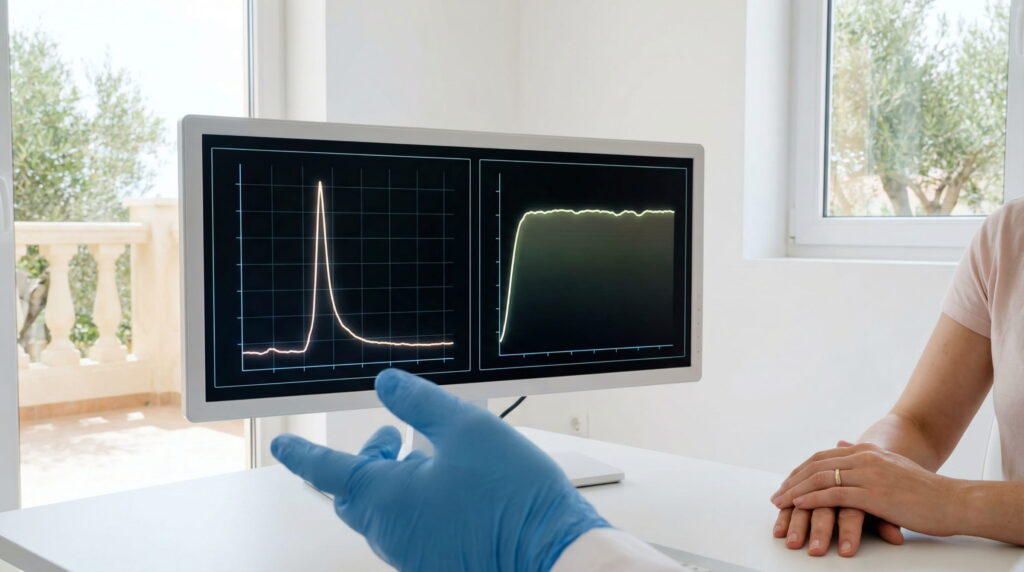
Acute stress is the normal reaction to a specific event: a busy period at work, a family issue, a fear. The body mobilizes and then returns to baseline. In general, this type of stress does not cause persistent fertility changes.
Chronic stress is different: a prolonged state of tension, worry, pressure, or mental fatigue that lasts for weeks and months. The link between stress and fertility becomes most relevant when stress is chronic—not when we’re talking about isolated episodes. This is where indirect consequences appear most often: fragmented sleep, irritability, reduced appetite—or, conversely, emotional eating—less movement, alcohol use or smoking, plus a more difficult relationship with your own body. In this context, fertility may be affected precisely because the body starts operating in “survival mode.”
How stress influences fertility: the mechanisms, in plain language
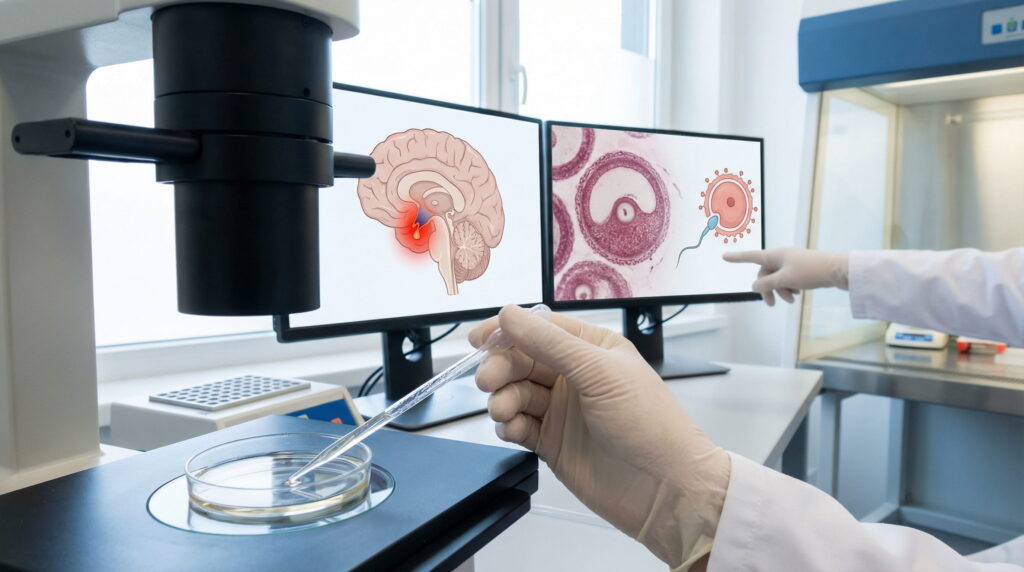
The body has two hormonal “axes” that intersect: one for the stress response and one for reproduction. When stress is persistent, the hormones involved in the alarm response (especially cortisol) can interfere with the hormones that regulate ovulation, the menstrual cycle, and sperm production. It’s not a simple “stress = infertility” equation, but the direction is plausible and supported by clinical observation: disruptions appear more often during periods of chronic stress.
There’s another key detail: stress changes behaviors that, in turn, influence fertility. In the stress and fertility context, shifts in appetite, energy, and routine can matter more than they seem at first glance. For example, when sleep decreases and fatigue increases, vulnerability to inflammation rises, weight becomes more variable, and libido may drop. Sometimes, those “secondary effects” are the missing link.
Stress and fertility in women: what can change

In women, stress often shows up first through cycle changes. When we talk about stress and fertility in women, the first thing I check is whether your cycle and sleep quality have changed. Some patients notice delayed periods, longer cycles, rarer ovulation, or stretches where ovulation doesn’t occur. That doesn’t mean stress is the only culprit, but it’s worth considering—especially if the changes line up with an emotionally intense period.
Another common factor is sleep quality. Fragmented sleep and consistently late bedtimes can influence how the body “schedules” hormone secretion. In addition, stress can intensify symptoms of existing conditions (such as endometriosis or polycystic ovary syndrome), not because it creates them, but because it reduces the body’s tolerance for pain, fatigue, and inflammation.
At the same time, I don’t recommend attributing every irregularity to stress alone. If your cycle changes significantly or persistent signs appear (unusual bleeding, significant pain, absent ovulation), medical evaluation remains the right step.
“You deserve to be listened to, seen, treated with respect and supported throughout your life.”

Stress and fertility in men: what we see in practice

In men, chronic stress can be associated with decreased libido, erectile or ejaculation difficulties, and fatigue that reduces sexual frequency during the “fertile window.” These are real effects—and unfortunately they’re amplified by the pressure of “we have to succeed this month.”
If we’re speaking strictly about semen, this should be said responsibly: a short stress episode doesn’t automatically “ruin” a sperm test. But chronic stress combined with insufficient sleep, alcohol, smoking, poor diet, or overwork can contribute to weaker parameters. That’s why the right approach isn’t hunting for a single culprit—it’s looking at the full picture.
Stress during trying-to-conceive and fertility treatments
During the period you’re trying to conceive, stress has two faces. The first is biological (the mechanisms above). The second is behavioral and relational: stress can lead to avoiding intimacy, couple tension, delaying investigations, or giving up too early on a treatment plan.
In In Vitro Fertilization (IVF), stress matters especially through how it affects routine and your ability to move through successive steps (appointments, tests, medication timing, emotional recovery between stages). Here, the right support can make the difference between “I feel overwhelmed” and “I have a plan I can follow.”
For many couples, psychological counseling becomes useful too—not because “it’s all in your head,” but because infertility pressure is among the hardest emotional periods a couple can go through. When emotions are managed, adherence to the medical plan improves and decisions become clearer.
What you can do to reduce stress’s impact on fertility

There isn’t a single miracle technique. What works is a set of realistic, sustainable adjustments that reduce chronic stress and stabilize your routine. I recommend viewing interventions as a “nervous-system hygiene program,” not as another obligation.
A few practical directions (this is where a list really helps):
- Sleep: a consistent bedtime, fewer screens at night, limiting coffee after the afternoon.
- Moderate movement: walking, swimming, pilates, light workouts—consistency matters more than intensity.
- Short, repeatable techniques: guided breathing for 5–10 minutes, mindfulness, progressive muscle relaxation.
- Healthy boundaries: reducing overload (especially if you notice you’re constantly “running on empty”).
- Emotional support: guided conversations as a couple or therapy when tension becomes constant.
When it comes to “anti-stress” supplements, I prefer caution. Some products can interact with hormonal treatments or create a false sense of control. If you’re considering supplements, it’s safer to discuss them in the context of your medical history.
When stress isn’t the only explanation: when medical evaluation makes sense
If you’ve been trying for months and frustration builds, it’s tempting to blame everything on stress. Still, the right recommendation is to hold two ideas in parallel: yes, stress is worth addressing, and yes, investigations should be done on time. Even if stress is present, in the stress and fertility equation it remains essential to rule out treatable medical causes.
As a general orientation: if you’re under 35 and have tried for 12 months without success—or if you’re 35 or older, after 6 months—it’s reasonable to discuss a full evaluation. If there are clear symptoms (very irregular cycles, significant pelvic pain, history of surgery, known issues), evaluation may be indicated even earlier.
Common myths about stress and fertility
A common myth is: “If you relax, you’ll get pregnant.” The message is problematic because it places pressure and blame on the patient—if she doesn’t succeed, it means she “didn’t relax enough.” In reality, relaxation helps, but it doesn’t replace correct diagnosis and treatment.
Another myth is that stress “causes” infertility directly in any context. The truth is more nuanced: stress can contribute, worsen, and complicate, but it rarely explains infertility on its own.
Cortisol isn’t an “absolute enemy.” It’s a necessary hormone. The problem arises when levels stay high for a long time, on a background of reduced sleep and exhaustion.
Frequently Asked Questions
Can stress delay ovulation?
Yes—especially chronic stress can affect hormonal rhythm and lead to delayed or less frequent ovulation. If the change persists for multiple cycles, it’s worth evaluating medically as well, not just attributing it to stress.
Can stress stop ovulation completely?
It can happen, but it’s not the rule. It usually appears in contexts of major stress, exhaustion, significant weight loss, or very reduced sleep. If ovulation is repeatedly absent, investigations are important.
Does stress affect egg quality?
We can’t reduce everything to a single causal link, but chronic stress may indirectly influence the hormonal environment and behaviors that support reproductive health (sleep, nutrition, inflammation). That’s why we address it as an optimization factor—not a single explanation.
Can stress reduce sperm quality?
It can contribute, especially when combined with insufficient sleep, alcohol, smoking, and overload. If effects appear, they show over time, because spermatogenesis has a cycle of several months.
In IVF, does stress lower the chance of success?
Severe stress can affect adherence to treatment and emotional recovery between stages. We don’t treat it as “the decisive factor,” but we take it seriously because it influences how you move through the entire process.
What anti-stress technique is most useful when trying to conceive?
The one you can repeat consistently. In practice, stable sleep and moderate movement create an excellent base, and guided breathing or mindfulness help as a daily “tool.” The key is realistic, not perfect.
When should you consider psychological counseling?
When you feel persistent anxiety, insomnia, frequent couple conflict, catastrophic thinking, or when trying to conceive has become the only topic in life. The right support can reduce suffering and help you make clearer decisions.
How do you tell stress apart from a medical problem?
If symptoms are persistent (very irregular cycles, pain, abnormal bleeding, history suggests a cause), stress shouldn’t become the “final diagnosis.” The healthiest approach is to address both directions: regulating stress and pursuing medical evaluation.

Dr. Andreas Vythoulkas’ role in the stress–fertility relationship
In my practice, I treat stress as an important piece of the puzzle—but not as a convenient explanation. The first step is to understand your real context: how you sleep, what your days look like, what pressures exist in the couple, and what has changed in recent months. Then we place it alongside medical data, because fertility can’t be assessed correctly “by assumption.”
When treatment is indicated, we discuss options and steps clearly—including situations where In Vitro Fertilization (IVF) is a suitable solution within a broader plan. In parallel, I want patients and couples to have the support they need to get through this period without feeling alone or overwhelmed; that’s why, in many cases, psychological counseling can meaningfully complement the medical component.
My goal is to offer a plan that is both medically sound and emotionally sustainable. Stress can be managed, fertility can be investigated, and decisions can be made step by step—with clarity and without blame.
Talk with me about
Stress and Fertility

Sources
- The relationship between stress and infertility (NIH/PMC)
- ESHRE guideline: Routine psychosocial care in infertility and medically assisted reproduction (Human Reproduction)
- Optimizing natural fertility: a committee opinion (ASRM)
- Infertility: The Impact of Stress and Mental Health (American Psychiatric Association)
- Perceived stress and semen quality (NIH/PMC)
Similar Articles

What Preterm Labor Is and How to Recognize It

Treatment Plan in Infertility: How the Next Step Is Chosen
