

In an In Vitro Fertilization (IVF) cycle, hormones in IVF are not “just injections” or “just lab tests.” In this setting, hormones are the tools we use to coordinate egg maturation, the timing of egg retrieval, and the preparation of the endometrium. They are the mechanism that allows us to control—step by step—the maturation of the oocytes, the optimal timing for retrieval, endometrial preparation, and luteal-phase support after embryo transfer. Beyond technical terms, the idea is simple: in IVF, success depends heavily on timing—and timing is largely hormonal.
In my practice, I often hear the same question: “If I took the hormones correctly, why didn’t it work?” The honest answer is rarely black-and-white. Hormones improve your chances when they are chosen and adjusted personally, when monitoring is done at the right time, and when clinical decisions (such as “increase the dose,” “wait one more day,” or “freeze-all”) are made promptly, based on the full picture. When treatment is well managed, IVF hormones don’t “force” the body—they create a predictable synchronization tailored to your physiology.
Why hormones in IVF directly influence success rates

IVF hormones have two major roles. The first is to achieve a well-coordinated cohort of growing follicles so that we obtain mature oocytes at retrieval. The second is to prepare an endometrium that is within the optimal implantation window, meaning a time period when implantation is most likely.
Naturally, only one follicle becomes dominant. In IVF, through stimulation, we try to “rescue” multiple follicles in the same cycle—without pushing the body beyond its limits. This is where the nuance lies: there is no universal recipe, and the same medications can produce different effects from one patient to another depending on age, ovarian reserve, previous response, body weight, metabolic profile, and many other variables.
Where hormones matter most in IVF: the key stages
In an IVF cycle, hormones matter throughout, but there are a few moments where the difference between “standard” and “personalized” becomes most clear.

Initial assessment and the hormonal “baseline”
Before starting a cycle, we need to understand the starting point. That’s why hormone tests aren’t “formalities,” but reference points that help us build the protocol and choose the initial doses. Interpretation is always contextual: the same value can mean something different depending on the cycle day, your history, and the baseline ultrasound.
Ovarian stimulation
Here we use gonadotropins (essentially FSH preparations, sometimes combined or adjusted) to encourage multiple follicles to grow. The goal is not “as many as possible at any cost,” but “as many as are right for you.” An overly intense response can increase risks, and an overly weak response can reduce the chance of obtaining enough good-quality oocytes. In balanced stimulation, IVF hormones are dosed to raise the odds—without unnecessarily raising risks.
Preventing premature ovulation
During stimulation, there is a risk that the body triggers ovulation before we want it to. That’s why we use medications that control the pituitary–ovarian axis (GnRH antagonist or GnRH agonist, depending on the protocol). The choice depends on your profile, OHSS risk, and how you respond to dosing.
The “trigger”: final maturation

The trigger is the step that synchronizes final oocyte maturation and sets the optimal retrieval time. The choice of trigger (hCG, GnRH agonist, or combinations) is not a minor detail. It affects OHSS risk and may change the transfer strategy (fresh vs. frozen transfer later).
Luteal support after retrieval and after embryo transfer
After retrieval, the body often needs hormonal support—especially progesterone. Patients frequently underestimate this phase, even though it is one of the most important for implantation and early pregnancy support.
The main IVF hormones and what they “tell us” during treatment
It helps to think of IVF hormones as a language: each hormone carries information, and together they form the picture. We don’t interpret a single number in isolation—we look at trends and context.
FSH in IVF
FSH is the engine of follicular stimulation. In IVF hormonal treatment, FSH (as injections) supports follicle growth. On monitoring, we care about the ovarian response: how many follicles grow, how evenly they grow, and whether the pace is appropriate.
LH in IVF
LH plays a role in maturation and the ovulatory event. In certain situations, LH levels can suggest a risk of premature ovulation—one reason why antagonist/agonist control matters. For some patients, a different approach or protocol strategy may be better to maintain FSH–LH balance.
Estradiol (E2) in IVF
Estradiol is a useful marker of follicular activity and typically rises as follicles develop. We don’t interpret E2 with rigid cutoffs; we interpret it alongside ultrasound findings and growth dynamics. Sometimes a very high E2 indicates an intense response and may point toward a more cautious strategy (including postponing transfer).
Progesterone in IVF
Progesterone is essential for transforming the endometrium into a receptive environment. Before retrieval, progesterone rising too early can shift the implantation window—potentially changing the plan for transfer. After embryo transfer, progesterone is usually the foundation of luteal support.
hCG and GnRH-agonist triggers
Trigger choice affects both effectiveness and safety. If OHSS risk is high, we may prefer options that reduce that risk. This is where personalization matters greatly.
Thyroid (TSH) and prolactin
TSH and prolactin are not “IVF cycle hormones” per se, but they can influence fertility, ovulation, and early pregnancy. So if clinical suspicion exists or levels are abnormal, the plan may include correction before IVF or close monitoring.
Hormonal IVF protocols—and why there is no single “best” one
Protocols are chosen to achieve a good response with minimal risk. In practice, the most common are antagonist protocols and agonist (“long”) protocols. The key difference isn’t “which is more modern,” but which better fits your profile.
Antagonist protocols are often preferred for flexibility and OHSS risk control. Agonist protocols can be useful in specific situations where we want a different type of hormonal control. Sometimes we also discuss milder stimulation strategies—especially if prior history or ovarian reserve suggests that aggressive stimulation won’t provide real benefit.
There is also the strategic freeze-all decision (freezing all embryos) when the hormonal or endometrial environment isn’t ideal for a same-cycle transfer. This isn’t “a delay”—it’s optimization: we preserve embryos and choose a better moment for endometrial receptivity.
“You deserve to be listened to, seen, treated with respect and supported throughout your life.”

Hormonal monitoring in IVF: what we track and how decisions are made

Monitoring is how we confirm that IVF hormones are producing the exact response we want. Ultrasound shows the number and size of follicles, and hormone levels show the underlying biological activity. Dose adjustments, trigger timing, and transfer decisions are based on this combination.
Sometimes it is safer and more effective not to push a cycle forward—if complication risk is higher or if the hormonal picture suggests lower real chances for a fresh transfer. In those moments, a cautious decision can protect your health and improve your chances at the next step.
Progesterone after embryo transfer: why it matters so much
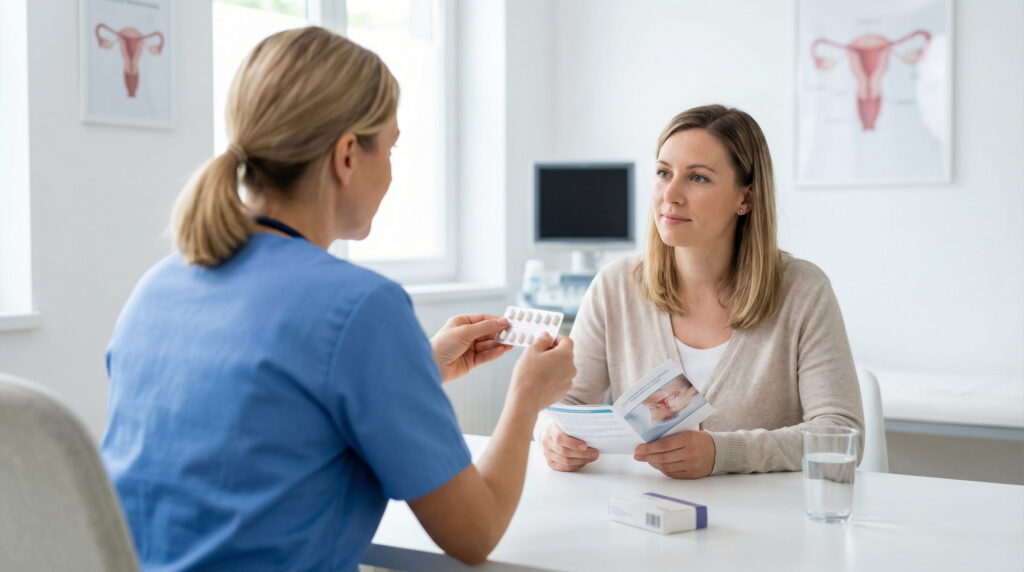
Progesterone is the hormone that stabilizes the endometrium and supports implantation. In practice, it’s one of the clearest examples of how IVF hormones support implantation. In most cases, luteal support with progesterone is not optional—it is a standard, expected part of IVF hormonal treatment.
The route (vaginal, oral, injectable) is chosen based on protocol, tolerance, and sometimes your history. There’s no single “perfect” option for everyone, but there is a best fit for each case—and the goal is the same: support the endometrium during the critical window.
It’s also important to know that progesterone can cause symptoms similar to early pregnancy (breast tenderness, sleepiness, bloating). These symptoms alone neither confirm nor rule out success. Confirmation comes with the recommended test at the proper time.
Side effects and risks related to IVF hormones
Most side effects are moderate and temporary: bloating, abdominal discomfort, breast tenderness, mood changes. They reflect ovarian response and hormonal shifts.
The most important risk to monitor is ovarian hyperstimulation syndrome (OHSS), which occurs mainly with very strong ovarian responses. That’s why protocol and trigger selection prioritize safety.
Contact your medical team promptly if you experience:
- significant abdominal pain or worsening pain
- rapid weight gain over a few days with marked bloating
- persistent nausea/vomiting or trouble staying hydrated
- shortness of breath, dizziness, reduced urine output
In most cases, prevention and proper monitoring significantly reduce risks, and when we intervene early, outcomes are good.
What you can do to support hormonal treatment
It helps to view treatment as a collaboration. Taking medication correctly and at the recommended times matters, and reporting symptoms or concerns early helps the team adjust effectively.
Avoid adding “extra” supplements or medications without discussing them, as some can interfere with treatment or create confusion when interpreting symptoms. A balanced lifestyle (sleep, hydration, no smoking, minimal or no alcohol) supports your body during a demanding period.
Frequently Asked Questions
Do IVF hormones “damage” the body long-term?
At the doses used in IVF, hormones are given for a limited time and, in most cases, effects are temporary. What matters most is an individualized plan and proper monitoring, so treatment stays within a safe range and risks are minimized.
If estradiol is high, does that mean better chances?
Higher estradiol can suggest more active follicles, but it does not guarantee egg or embryo quality. It must be interpreted together with ultrasound findings and how values change over time; sometimes very high levels can influence transfer strategy.
What does elevated progesterone before retrieval mean?
If progesterone rises too early, it can disrupt timing between the embryo and the endometrium (the implantation window). In those cases, the plan may be adjusted so transfer happens when endometrial conditions are more favorable.
Why can’t I use the same protocol as a friend who succeeded?
Because response to stimulation and hormonal patterns are individual. Protocol choice depends on age, ovarian reserve, prior response, and risk factors—so it should fit your profile, not someone else’s.
Do IVF hormones cause weight gain?
Some patients notice temporary weight changes due to fluid retention and bloating, especially during stimulation. This usually improves after the cycle; if weight increases rapidly with significant discomfort, it should be discussed with the medical team.
Why are hormone blood tests needed if I’m already having ultrasounds?
Ultrasound shows follicle number and size, while blood tests reflect the hormonal activity behind the scenes. Together, they guide dose adjustments, trigger timing, and sometimes the decision on fresh vs. frozen transfer.
If I’m taking progesterone and I have symptoms, does that mean I’m pregnant?
Progesterone can cause symptoms that resemble early pregnancy (breast tenderness, sleepiness, bloating) without confirming anything. The result is confirmed only by the recommended test at the right time.
When is it better to transfer: the same cycle or after freezing?
It depends on the hormonal picture and endometrial readiness in that cycle. If conditions are optimal, a fresh transfer may be appropriate; if not, transferring in a later cycle can be the better choice.

Role of Dr. Andreas Vythoulkas in IVF Hormones and Treatment Success
In my approach, IVF hormones are not a “standard package,” but the tools we use to adjust treatment to your real biology—cycle by cycle. I aim for decisions that are clear and logical: why we choose a certain protocol, what monitoring is telling us, what a dose change means, and how we select the optimal moment for trigger and transfer.
My goal is to balance effectiveness with safety. That means maximizing the chance of obtaining mature eggs and good-quality embryos, while also protecting you from avoidable complications. In some situations, postponing transfer and choosing a better-controlled cycle is not a step back—it’s optimization.
For patients, the hardest part is often uncertainty. That’s why I want each stage to have a clear purpose, and for you to understand why hormones are used in a certain way. Ultimately, treatment is easier to go through when there is clarity, predictability, and a coherent strategy—not just “tests and injections.”
Talk with me about
IVF hormones

Sources
Similar Articles

Fertility After 35: When It Is Best Not to Delay Evaluation

Progesterone and Estrogen: The Most Important Hormones
